

What sciatica actually is
The sciatic nerve is the largest nerve in your body. It starts in your lower back, runs through your hips and buttocks, and travels down each leg. When something irritates or compresses this nerve along its path, you feel it as sciatica — pain, tingling, numbness, or weakness that radiates from your back down one leg.
Sciatica is technically a symptom, not a diagnosis. The real question is: what's pressing on or inflaming the nerve? Common culprits we identify at our Oklahoma clinics:
- Herniated or bulging disc — disc material pressing on the nerve root
- Spinal stenosis — narrowing of the spinal canal squeezing the nerve
- Piriformis syndrome — a muscle deep in the buttock irritating the nerve as it passes through
- Degenerative disc disease — age-related wear that changes how the spine carries load
- Spondylolisthesis — one vertebra slipping forward over another
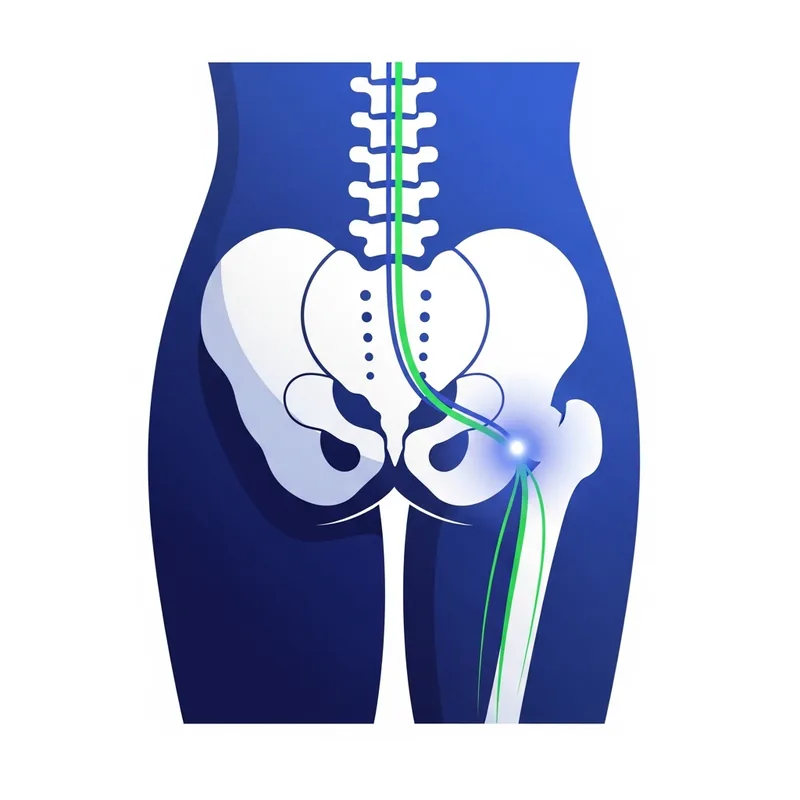
The classic pattern: Sharp, electric, or burning pain that starts in the lower back or buttock and travels down the back of one leg. It often gets worse when bending forward, sneezing, or coughing. If both legs are affected, that's often a different situation — call us right away.
Warning signs you shouldn't ignore
Get evaluated urgently if you have:
- Loss of bladder or bowel control
- Numbness in the groin or inner thighs
- Sudden, progressive weakness in the leg or foot
- Pain that follows a fall, accident, or trauma
- Symptoms in both legs at once
- Fever, unexplained weight loss, or night sweats with the pain
These signs are uncommon but matter. The vast majority of sciatica is treatable without surgery — but the rare cases that need urgent care need it quickly.
How we approach sciatica

Targeted Diagnosis
A focused exam to map exactly which nerve is involved, plus imaging if it will change the plan. Pinpointing the right level of the spine is half the battle.
Conservative Care
Targeted physical therapy, anti-inflammatory medication, activity modification, and home strategies that actually help — not just "rest until it goes away."
Image-Guided Injections
For nerve-root inflammation that hasn't calmed down, an epidural steroid injection places medication exactly where the nerve is angry. Often this is the turning point.
Advanced Interventions
For chronic or recurrent sciatica: radiofrequency ablation, spinal cord stimulation, or regenerative options.
Surgical Referral — When Truly Indicated
If there's progressive weakness, structural instability, or a clear surgical target that won't respond to conservative care, we'll connect you with a trusted spine surgeon.
Treatments we use for sciatica
- Epidural Steroid Injections — first-line interventional treatment for nerve-root pain
- Radiofrequency Ablation — for persistent facet-mediated component
- Selective Nerve Root Blocks — both diagnostic and therapeutic
- Spinal Cord Stimulation — for chronic cases that haven't responded
- Regenerative Therapies — biologic options for select patients
- Coordinated Physical Therapy

Frequently asked questions
How long does sciatica usually last?
Most acute episodes improve within 4 to 6 weeks with the right care. When pain persists past that, it's worth a focused evaluation rather than waiting it out — early intervention often shortens the whole course.
Should I rest or stay active?
Stay active within reason. Bed rest beyond a day or two actually slows recovery. Walking, gentle stretching, and avoiding the specific positions that flare your pain — that's the right balance for most patients.
Will I need surgery?
Probably not. The strong majority of sciatica patients improve without surgery. Surgery becomes a real consideration only when there's progressive weakness, intolerable pain after exhaustive conservative care, or specific structural problems.
Can sciatica come back?
It can — especially if the underlying cause (a degenerated disc, weak core, or postural pattern) isn't addressed. Part of our job is helping you build the strength and habits that make recurrence less likely.